A one-person team that runs like a system
In January 2026 the site was a Wix build designed in Figma. In February it moved to code. Today, 13 client case studies ship in English and French, generated and never hand-edited, and every release passes six automated gates. Where a script enforces a rule, nothing drifted; where only prose described a rule, the review found eleven gaps. A privacy check now keeps client names out of the code, where three had slipped in before it existed. The analytics loop is instrumented; it starts when distribution starts.
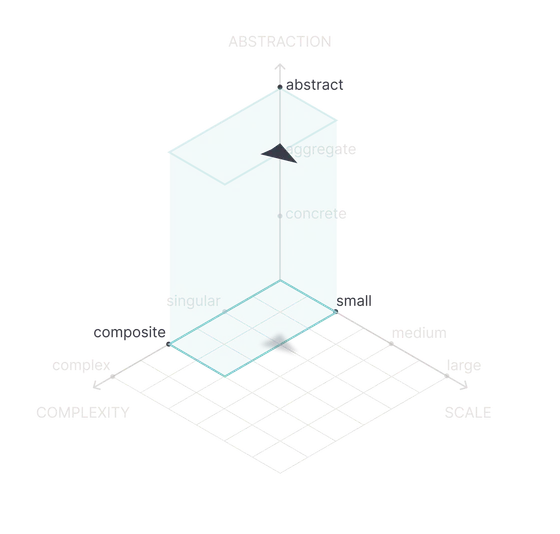
 Vehicle — the practitioner
 Vehicle — collaborators
 Interface — what was delivered
An independent practice must do three things at once: be found, show proof, and stay correct in two languages. There is no team. AI makes building fast, but it also makes mistakes fast. Eight weeks in, a review found eleven places where the project's notes no longer matched the code.
I treated the practice as a system to design, not a website to build. First, I learned the market's words: I researched how buyers and recruiters search, and split their words into two lists that never mix in one asset. Second, I put my whole career in one spreadsheet — 18 engagements, 30 claims, 13 cases — and generated every case-study page from it, so a number exists in one place only. Third, I decided who does what: an allocation matrix, adapted from NASA Human Systems Integration, assigns each task to me, to the AI or to a script. If a script can check a fact, the script checks it. Fourth, every AI session reads the same rulebook first, and diagrams settle what words leave open. Last, I log every decision (43 so far) and audit drift every month.
In January 2026 the site was a Wix build designed in Figma. In February it moved to code. Today, 13 client case studies ship in English and French, generated and never hand-edited, and every release passes six automated gates. Where a script enforces a rule, nothing drifted; where only prose described a rule, the review found eleven gaps. A privacy check now keeps client names out of the code, where three had slipped in before it existed. The analytics loop is instrumented; it starts when distribution starts.
Every AI guide says "go faster." Few say how to stay correct. Most teams adopted AI tools without changing how work is organized. Here, I decide, and I am a designer, not an engineer, so I cannot review every line the AI writes. Without structure, speed makes the work impossible to review, and so impossible to ship.
The power is in the pair: AI for speed, information architecture for direction. Without my career turned into a spreadsheet, I could not have built all this without losing my mind. The workbook became the seed: every page, check and tool grew from its structure. I always knew structure shapes surface, and I have case studies about it. Working alone made it visible in one place: without structure, there was nothing to steer, only output.
Engagements and outcomes, anonymized. Details on request.